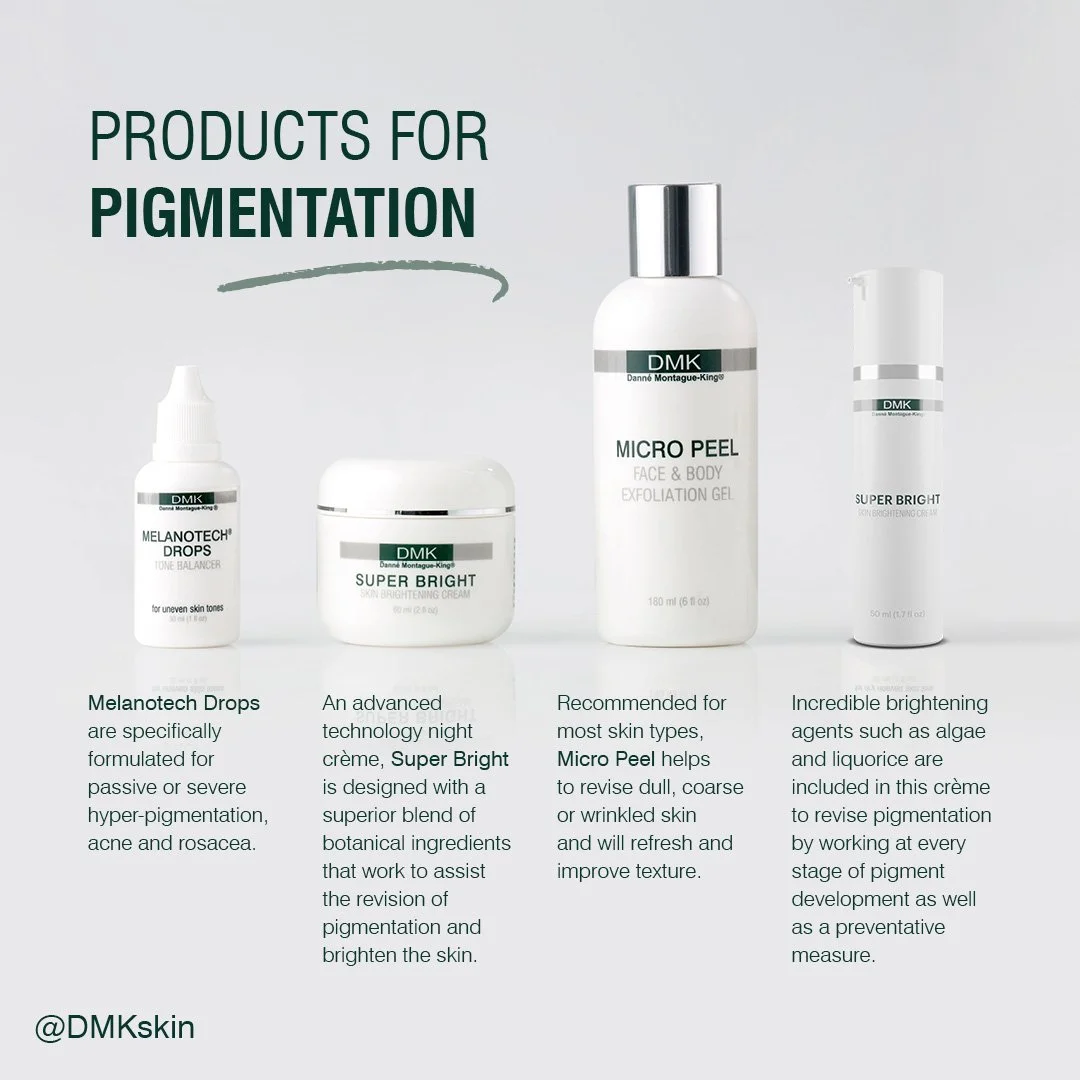
Pigmentation
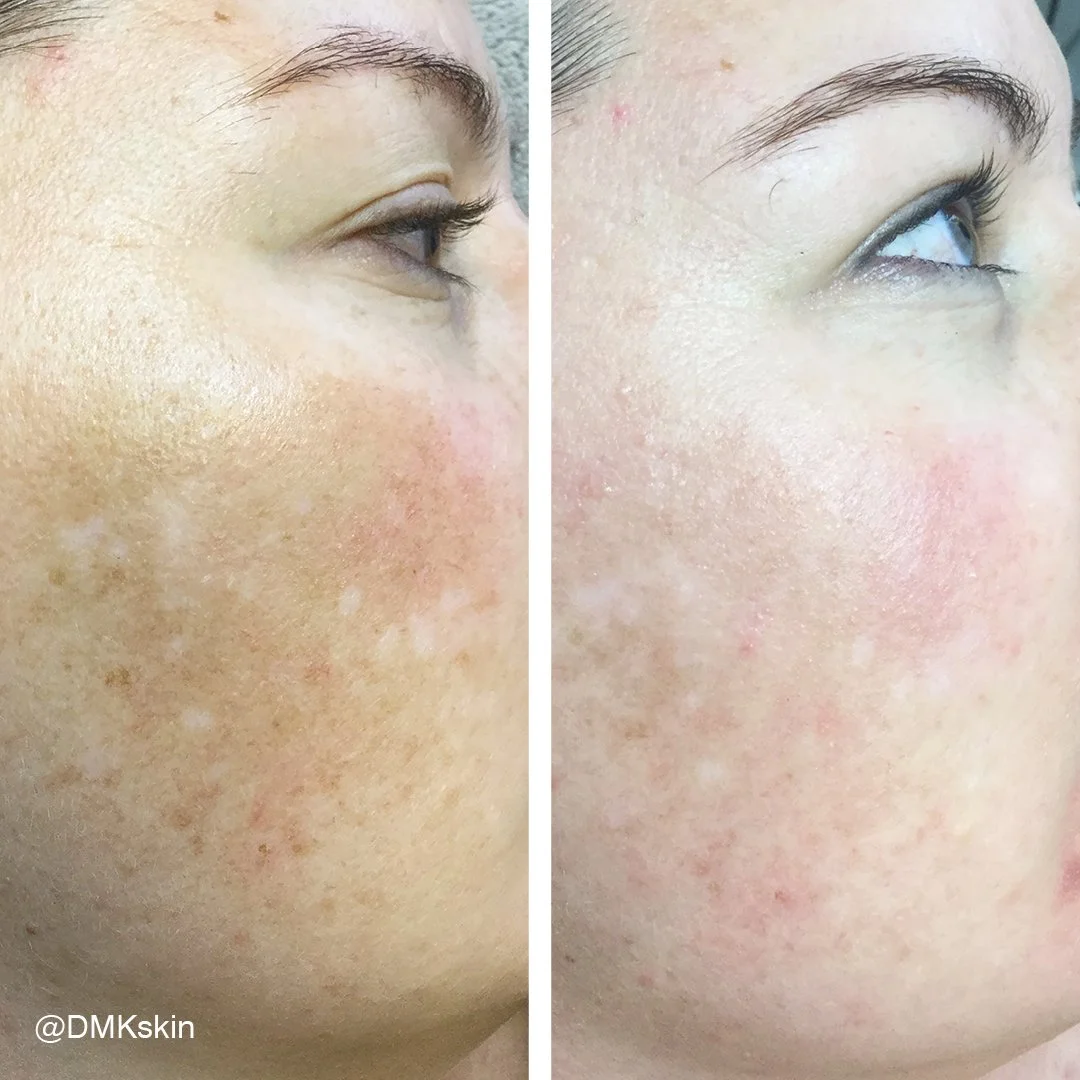
Melanin, the pigment that gives your skin its color, does more than just determine your shade. It’s your body’s natural defense system, protecting your cells’ DNA from harmful UV radiation. However, if your skin or body systems are out of balance, any type of trauma—like sun exposure, inflammation, or friction—can trigger extra melanin production, leading to pigmentation.
Passive pigmentation happens mostly due to hormonal changes, like during pregnancy or from certain medications. Stress and anxiety can also trigger this type of pigmentation.
Post-Inflammatory Hyperpigmentation (PIH), appears after the skin is injured or irritated. This can happen from acne, wounds, sun exposure, or even constant friction. Sometimes it doesn’t show up immediately. For example, years of sun exposure can suddenly show up as age spots on the hands, arms, neck, or face—even starting as early as age 15.
Treating pigmentation takes a consistent approach. Using DMK home products can help, but there’s no quick fix. Prevention is always easier than trying to fix pigmentation after it appears. Pigmentation can sit deep in the skin, making it hard for creams, serums, or even lasers to remove it completely.
Remodelling peels are one of the most effective ways to treat pigmentation because they help lift the pigment from the skin and allow new skin to form underneath. The best results come from a holistic approach, addressing both hormone levels and any issues within the skin itself.