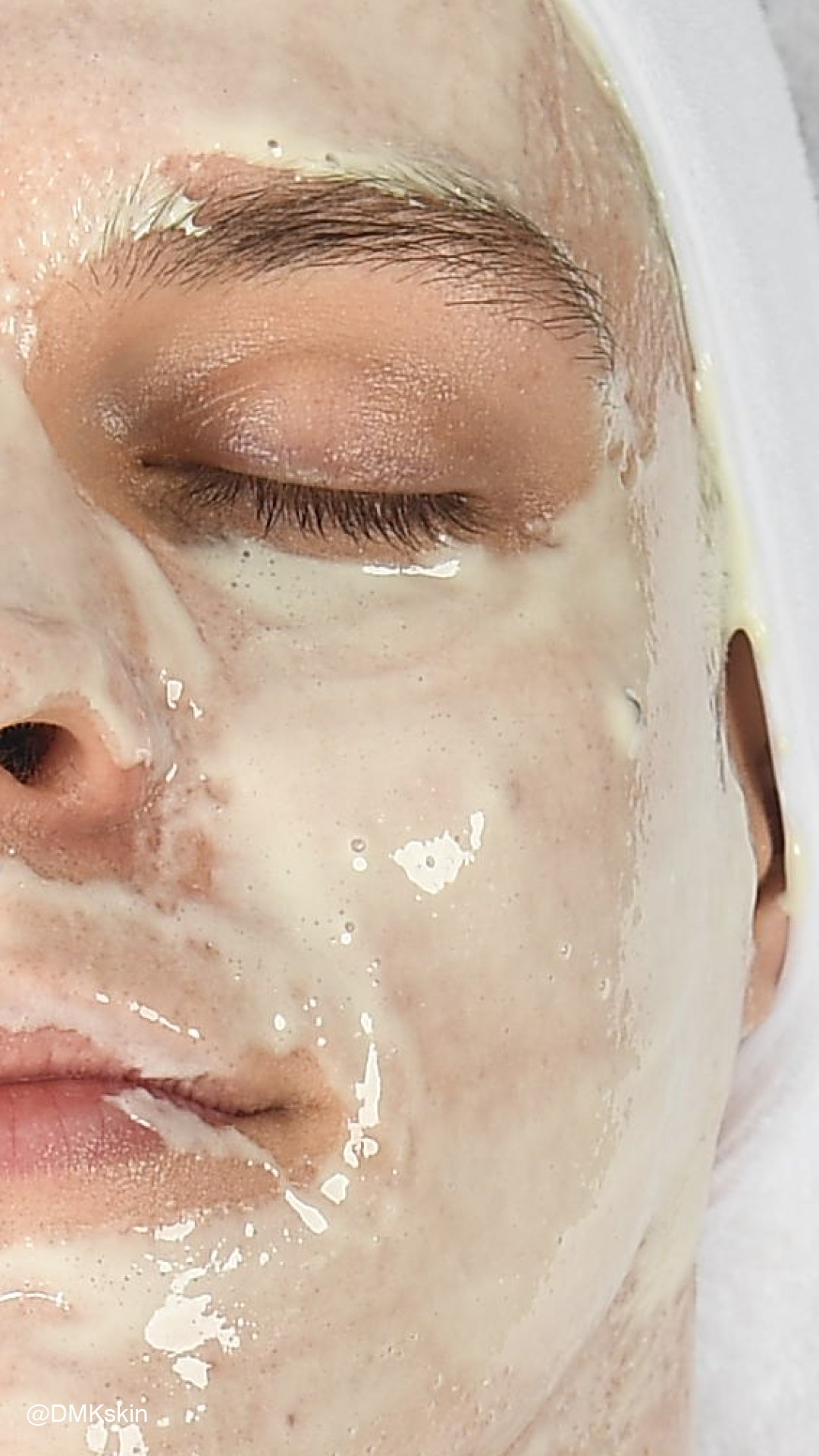
Why the skin barrier matters
If your skin feels dry, reactive, or sensitive to products that were previously tolerated, your skin barrier may be affected.
Changes in skin barrier function may be linked to overuse of active skincare, environmental factors, and underlying skin conditions. Understanding the skin barrier is a step in supporting overall skin health (Elias, 1983; Proksch, Brandner, & Jensen, 2008).
What Is the Skin Barrier?
The skin barrier—also called the stratum corneum—is the outermost layer of the skin. It is may be described as a “brick and mortar” structure:
Corneocytes (skin cells)
Lipids (ceramides, cholesterol, fatty acids)
This structure helps to reduce water loss and protect against external stressors. Research indicates that maintaining barrier integrity is associated with hydration and may help reduce inflammation (Elias, 1983; Proksch et al., 2008).
Environmental factors such as dry air, indoor heating and cooling and UV and environmental stress may affect skin barrier function. These factors can contribute to transepidermal water loss (TEWL), which may increase dryness or sensitivity (Denda, Sokabe, Fukumi-Tominaga, & Tominaga, 1998).
The Acid Mantle
The skin’s surface is covered by a slightly acidic film, known as the acid mantle, which plays a role in:
Supporting the skin microbiome
Helping to reduce the growth of harmful bacteria
Maintaining lipid organisation
Normal skin pH is typically around 4.5–5.5 (Lambers, Piessens, Bloem, Pronk, & Finkel, 2006). Harsh cleansers or excessive exfoliation may alter pH and affect barrier function.
Signs That the Skin Barrier May Be Affected
Signs that the barrier may be affected include:
Persistent dryness or flaking
Redness or inflammation
Tightness or itching
Breakouts or congestion
Stinging or discomfort with previously tolerated products
Factors That Can Influence Barrier Function
Over-cleansing or harsh products – may strip lipids from the skin (Ananthapadmanabhan, Moore, Subramanyan, Misra, & Meyer, 2004)
Overuse of actives – frequent acids, retinoids, or alcohol-based products may affect the lipid matrix
Ageing – natural changes can reduce lipid production and alter pH (Farage, Miller, Elsner, & Maibach, 2007)
Underlying skin conditions – such as acne, eczema, or rosacea (De Paepe, Vranckx, & Rogiers, 2005)
Environmental stress – dry climates or temperature extremes may increase water loss
Supporting Skin Barrier Function (Clinic Approach)
Hydration can help maintain skin comfort. Products which contains beta-glucan, may be included in routines to support hydration and skin comfort. Ingredients like beta-glucan and glycerin have been reported to help maintain moisture levels in the skin (Bouwstra, Gooris, Dubbelaar, & Ponec, 2003).
Topical formulations containing oils or lipids may assist in supporting barrier function. These are used to support skin moisture and comfort. Topical lipids may complement natural skin lipids (Elias & Feingold, 2006).
General nutrition and essential fatty acids may contribute to overall skin health and barrier function (Ziboh, Miller, & Cho, 2000).
Considerations
Supporting the skin barrier may improve hydration, reduce sensitivity, and help the skin tolerate active ingredients more comfortably. Responses vary between individuals, and no specific outcomes are guaranteed.
All professional care and product recommendations are tailored following a consultation to determine suitability.
References
Ananthapadmanabhan, K. P., Moore, D. J., Subramanyan, K., Misra, M., & Meyer, F. (2004). Cleansing without compromise: The impact of cleansers on the skin barrier and the technology of mild cleansing. Dermatologic Therapy, 17(Suppl 1), 16–25. https://doi.org/10.1111/j.1396-0296.2004.04S1003.x
Bouwstra, J. A., Gooris, G. S., Dubbelaar, F. E., & Ponec, M. (2003). Structure of the skin barrier and its modulation by vesicular formulations. Advanced Drug Delivery Reviews, 55(5), 357–368. https://doi.org/10.1016/S0169-409X(03)00043-3
De Paepe, K., Vranckx, H., & Rogiers, V. (2005). Barrier function in acne, eczema, and rosacea: Comparison of skin hydration and transepidermal water loss. Skin Research and Technology, 11(3), 157–162. https://doi.org/10.1111/j.0909-725X.2005.00135.x
Denda, M., Sokabe, T., Fukumi-Tominaga, T., & Tominaga, M. (1998). Environmental effects on the skin barrier: Influence of dry climates on transepidermal water loss. Journal of Investigative Dermatology, 110(4), 300–305. https://doi.org/10.1046/j.1523-1747.1998.00287.x
Elias, P. M. (1983). Epidermal lipids, barrier function, and desquamation. Journal of Investigative Dermatology, 80(1 Suppl), 44s–49s. https://doi.org/10.1111/1523-1747.ep12317976
Elias, P. M., & Feingold, K. R. (2006). Skin barrier. CRC Press.
Farage, M. A., Miller, K. W., Elsner, P., & Maibach, H. I. (2007). Intrinsic and extrinsic factors in skin ageing: A review. International Journal of Cosmetic Science, 29(5), 301–308. https://doi.org/10.1111/j.1468-2494.2007.00379.x
Lambers, H., Piessens, S., Bloem, A., Pronk, H., & Finkel, P. (2006). Natural skin surface pH is on average below 5, which is beneficial for its resident flora. International Journal of Cosmetic Science, 28(5), 359–370. https://doi.org/10.1111/j.1468-2494.2006.00344.x
Proksch, E., Brandner, J. M., & Jensen, J. M. (2008). The skin: An indispensable barrier. Experimental Dermatology, 17(12), 1063–1072. https://doi.org/10.1111/j.1600-0625.2008.00786.x
Ziboh, V. A., Miller, C., & Cho, Y. (2000). Essential fatty acids and skin health. American Journal of Clinical Nutrition, 71(1 Suppl), 361S–366S. https://doi.org/10.1093/ajcn/71.1.361S
Understanding Treatment Costs
Looking for clear information about treatment pricing in Tamworth NSW? Australian regulations limit how clinics can publicly advertise the cost of certain medical treatments. That’s why some prices aren’t listed online. Pricing is always discussed during a personalised consultation to ensure treatments are appropriate, ethical, and tailored to your individual needs. Book a free consultation at our Tamworth and Armidale clinics to receive a transparent cost breakdown.
What we can (and can’t) say about pricing
We know clarity around treatment costs matters. It’s frustrating when you can’t find a simple price list — and we hear you. The reason some prices aren’t displayed isn’t about being vague or secretive; it’s about following Australian regulations and making sure every client receives advice that’s appropriate for them.
Certain treatments must be discussed on an individual basis so pricing reflects your suitability, and professional recommendations. Our advertising must not state or imply that it is normal or a need to have higher risk cosmetic procedures.
Frequently Asked Questions
Why don’t you list prices for some treatments?
Australian regulations restrict clinics from publicly advertising the cost of certain medical treatments. Pricing must be based on a personalised consultation to ensure safety, suitability, and proper care. You’ll only ever be quoted for treatments that are suitable for you.
How can I get a price estimate?
We’re happy to help. Book a free consultation for advice including potential side affects and risks, with no obligation
Are there any hidden fees?
No. You’ll receive complete transparency on any costs before proceeding with any treatment.
Why is the consultation free?
We believe you should have all the information you need before making a decision. Consultations are essential to discuss information about risks and potential risks, recovery time and the recovery experience. Our consultations are complimetary, allowing patients to discuss options without pressure.
What’s the next step?
The best way to understand procedures and pricing is to speak with our Registered Nurses on 0401518197 or book your consultation today.

What is skin needling?
Skin needling procedure. Temporary redness and sensitivity are common. Suitability is assessed prior to treatment. Outcomes vary.
Skin needling, also known as microneedling, involves the use of fine needles to create controlled micro-injuries in the skin. These micro-injuries trigger a wound-healing response. Clinical studies have demonstrated that microneedling can induce collagen formation and dermal remodelling through this process (Aust et al., 2008; Fabbrocini et al., 2014).
Its use is supported in the literature as part of a broader treatment approach rather than a standalone solution (Alster & Graham, 2018).
The Society Cosmetic & Skin Clinic Approach
At Society Cosmetic & Skin Clinic in Tamworth, skin needling treatments are performed by a Registered Nurse. A consultation is required to assess suitability, discuss potential risks, side affects and recovery.
Like all skin treatments, it carries potential risks and side effects. These will be discussed prior to treatment.
While research is ongoing, current evidence suggests it may be beneficial for certain skin concerns when performed by trained professionals. Results vary between individuals, and multiple treatments may be recommended.
If you are considering skin needling, a personalised consultation can help determine whether it is appropriate for your skin and goals. Like all skin treatments, it carries potential risks and side effects. These should be discussed prior to treatment.
Common, Expected Side Effects
These are typically mild and temporary:
Redness (erythema) – often similar to a mild sunburn and may last 24–72 hours
Swelling (oedema) – usually mild and short-lived
Skin sensitivity – including warmth, tightness, or tenderness
Dryness or flaking – as the skin undergoes renewal
Mild pinpoint bleeding – can occur during treatment
These responses are part of the skin’s normal inflammatory and healing process (Alster & Graham, 2018).
Less Common Side Effects
Bruising – more likely in delicate areas or thinner skin
Prolonged redness – may persist for several days in some individuals
Temporary breakouts – can occur as underlying congestion surfaces
Milia formation – small white bumps may develop during healing
Potential Adverse Reactions
While uncommon, more significant reactions can occur:
Infection
There is a small risk of bacterial infection if post-treatment care is not followed or if the skin barrier is compromised (Singh & Yadav, 2016).
Post-Inflammatory Hyperpigmentation (PIH)
Pigmentation changes may occur, particularly in individuals with darker skin types or those exposed to UV post-treatment.
Reactivation of Herpes Simplex Virus
Clients with a history of cold sores may experience reactivation following treatment.
Delayed Healing
Healing time may be prolonged in individuals with impaired skin barrier function or underlying health conditions.
Scarring
Although rare, there is a potential risk of scarring, particularly if treatment is performed too aggressively or on compromised skin.
Contraindications and Risk Factors
Skin needling may not be suitable for individuals with:
Active acne, infection, or open wounds
Certain inflammatory skin conditions (e.g. eczema, psoriasis flare)
History of keloid or hypertrophic scarring
Recent use of isotretinoin (medical guidance required)
Compromised immune function
A thorough consultation is required to assess suitability.
Minimising Risk
To reduce the likelihood of adverse effects:
Treatment should be performed by a qualified and trained practitioner
Appropriate skin preparation and aftercare should be followed
Sun exposure should be avoided post-treatment
Active or sensitising products should be paused as advised
Important Considerations
Individual responses to skin needling vary. Multiple treatments may be recommended, and outcomes cannot be guaranteed.
All potential risks, benefits, and alternatives should be discussed prior to proceeding with treatment. Treatments are only available to patients 18 years and older.
Leigh Pritchard
Registered Nurse
No. NMW0002347730NMW0002347730
References
Alster TS, Graham PM (2018). Microneedling: A review and practical guide. Dermatologic Surgery.
Singh A, Yadav S (2016). Microneedling: Advances and widening horizons. Indian Dermatology Online Journal.
Aust MC, Reimers K, Repenning C, et al. (2008). Percutaneous collagen induction therapy: an alternative treatment for scars, wrinkles, and skin laxity. Plastic and Reconstructive Surgery.
Fabbrocini G, De Vita V, Pastore F, et al. (2014). Combined use of skin needling and platelet-rich plasma in acne scarring treatment. Dermatologic Surgery.
Alam M, Han S, Pongprutthipan M, et al. (2018). Efficacy of a needling device for the treatment of acne scars: a randomized clinical trial. JAMA Dermatology.
Alster TS, Graham PM (2018). Microneedling: A review and practical guide. Dermatologic Surgery.
Prausnitz MR, Langer R (2008). Transdermal drug delivery. Nature Biotechnology.